

Introduction
In today’s highly competitive digital world, businesses must do more than simply offer quality products or services. They must build strong recognition and trust among their target audience. This is where a brand awareness strategy becomes essential.
A well-planned strategy helps businesses increase visibility, build credibility, and connect with customers on a deeper level. When people recognize your Brand Awareness Strategy, they are more likely to trust it, remember it, and eventually purchase from it.
Companies that invest in building awareness often experience long-term growth because their brand becomes familiar to customers before they even start comparing products or services.
This guide explains how businesses can develop a powerful strategy that improves visibility, strengthens reputation, and drives long-term success Brand Awareness Strategy.
Table of Contents
What is a Brand Awareness Strategy
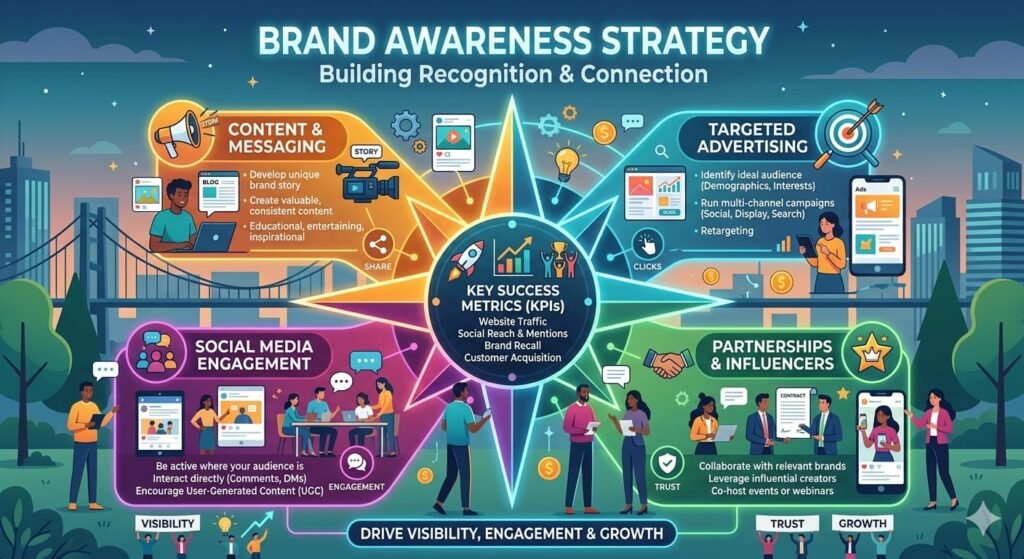
A brand awareness strategy is a structured plan used to make people familiar with a business, its products, and its values. The main objective is to ensure that potential customers recognize the Brand Awareness Strateg when they see it or hear about it.
It involves multiple marketing activities designed to reach a wider audience and build recognition over time.
These activities may include:
• content marketing
• social media campaigns
• search engine optimization
• influencer collaborations
• advertising campaigns
The goal is not only to promote products but also to create a lasting impression in the minds of customers.
Why Brand Awareness is Important for Businesses
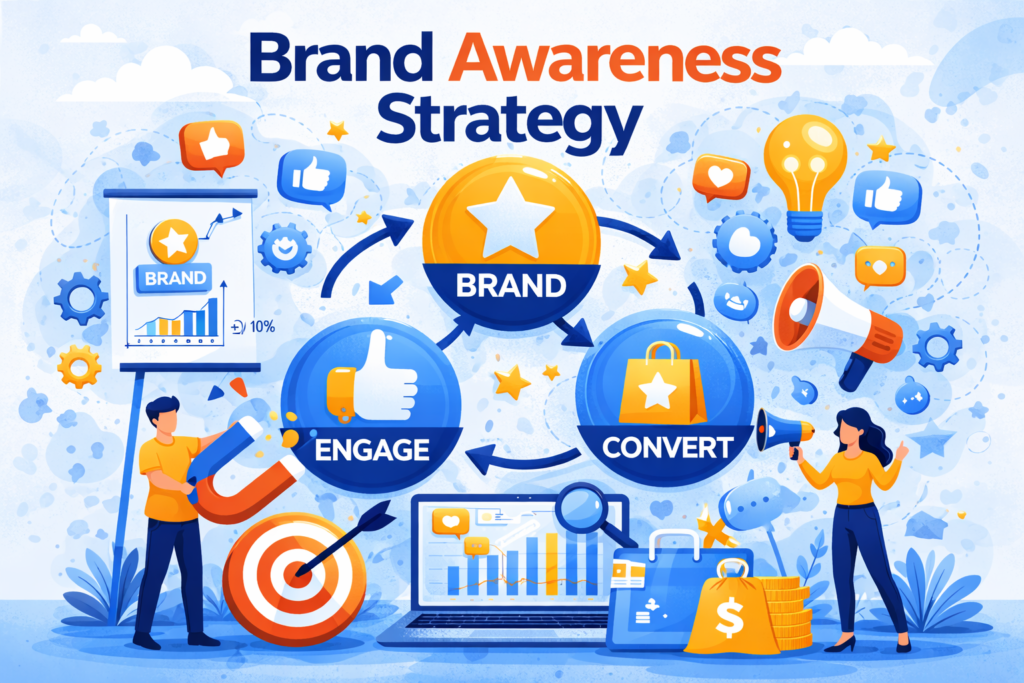
Many businesses focus only on sales and advertising, but awareness plays an equally important role in long-term growth.
Builds Customer Trust
People prefer buying from brands they already recognize. Familiarity creates confidence and reduces hesitation during purchasing decisions.
Improves Customer Loyalty
When customers become familiar with a brand, they are more likely to remain loyal and return for future purchases.
Supports Marketing Campaigns
Marketing campaigns perform better when people already recognize the brand name.
Increases Market Reach
A strong brand presence allows businesses to reach new audiences and expand into new markets.
Key Elements of a Successful Strategy
Developing an effective plan requires several important elements working together.
Clear Brand Identity
Brand Awareness Strategy identity includes the visual and emotional representation of a business.
It includes:
• logo
• brand colors
• typography
• design style
A consistent identity helps customers recognize the brand instantly.
Consistent Messaging
Consistency in messaging ensures that customers receive the same message across all platforms.
Businesses should communicate their mission, values, and benefits clearly includess Brand Awareness Strategy.
Strong Online Presence
Having a professional website and active social media profiles increases brand visibility.
A strong digital presence ensures that customers can easily find and interact with the brand.
Steps to Create a Powerful Brand Awareness Strategy
Building recognition does not happen overnight. Businesses must follow a structured approach to reach their audience effectively.
Step 1: Identify Your Target Audience
Understanding your audience is the foundation of every marketing strategy.
Businesses should analyze:
• demographics
• interests
• behavior patterns
• purchasing habits
Knowing your audience helps create marketing messages that resonate with them.
Step 2: Define Your Brand Message
Your message should clearly communicate Brand Awareness Strategy:
• what your business does
• what problems you solve
• what makes you different
A strong message helps people understand the value your brand offers.
Step 3: Create Valuable Content
Content marketing is one of the most powerful tools for increasing brand visibility.
Businesses can publish:
• blog articles
• videos
• guides
• infographics
• social media posts
Educational content builds authority and positions your brand as an industry expert.
Step 4: Use Social Media Platforms
Social media platforms allow businesses to connect directly with their audience.
Popular platforms include:
• Instagram
• LinkedIn
• Facebook
• YouTube
• Twitter
Posting engaging content regularly helps maintain visibility and strengthen relationships with followers and increase Brand Awareness Strategy.
Step 5: Optimize for Search Engines
Search engine optimization helps your website appear in search results when people look for related information.
Important SEO practices include:
• keyword optimization
• high-quality content
• internal linking
• mobile-friendly design
• fast loading pages
SEO improves discoverability and increases organic traffic.
Role of Content Marketing in Brand Awareness
Content marketing helps businesses Brand Awareness Strategy to educate their audience while promoting their brand naturally.
Instead of focusing only on sales, companies provide useful information that helps customers solve problems.
Examples include:
• tutorials
• case studies
• industry insights
• how-to guides
This approach builds trust and positions the brand as a reliable source of information Brand Awareness Strategy.
Social Media and Brand Visibility
Social media plays a significant role in increasing recognition and Brand Awareness Strategy
Businesses can use social platforms to:
• share valuable content
• engage with customers
• run promotional campaigns
• gather feedback
Consistent interaction helps create a loyal community around the brand.
Influencer Marketing and Brand Exposure
Influencer marketing has become an effective way to reach the Brand Awareness Strategy increase new audiences.
Influencers already have established trust with their followers. When they recommend a Brand Awareness Strategy, their audience is more likely to pay attention.
Businesses can collaborate with influencers to Brand Awareness Strategy:
• promote products
• share brand stories
• demonstrate product usage
Choosing influencers whose audience matches your target market is essential.
Importance of Visual Branding
Visual elements play a crucial role in recognition the Brand Awareness Strategy
Customers often remember visual Brand Awareness Strategy cues faster than text.
Important visual elements include:
• logo design
• color palette
• typography
• imagery style
Brand Awareness Strategy Maintaining consistent visuals across all platforms strengthens recognition.
Email Marketing for Brand Awareness
Email marketing remains one of the most effective digital marketing channels.
Businesses can use email newsletters to Brand Awareness Strategy:
• share valuable content
• promote offers
• update customers about new products
• maintain long-term relationships
Regular communication keeps the Brand Awareness Strategy fresh in the minds of customers.
Customer Experience and Brand Awareness Strategy Perception
Customer experience plays a major role in shaping how people perceive a brand.
Positive experiences encourage customers to recommend the brand to others.
Businesses should focus on Brand Awareness Strategy
• responsive customer support
• smooth website navigation
• personalized communication
Satisfied customers often become brand advocates.
Common Mistakes to Avoid Brand Awareness Strategy
While building awareness, businesses sometimes make mistakes that reduce effectiveness.
Inconsistent Brand Awareness strategy
Changing logos, colors, or messaging frequently can confuse customers.
Ignoring Customer Feedback
Customer feedback provides valuable insights for improving products and services.
Focusing Only on Sales
Awareness campaigns should prioritize value and engagement rather than constant promotion.
Measuring Brand Awareness Strategy
Tracking results helps businesses understand whether their strategy is working.
Important metrics include:
• website traffic
• social media engagement
• brand mentions
• search volume for brand name
Analyzing these metrics allows businesses to refine their Brand Awareness Strategy.
Future Trends in Brand Awareness Strategy
Technology continues to transform how brands connect with audiences.
Some important trends include:
Artificial Intelligence
AI helps businesses personalize marketing campaigns and analyze customer behavior.
Video Marketing
Short-form videos are becoming one of the most powerful engagement tools.
Voice Search
Voice assistants are changing how users search for information online.
Interactive Content
Quizzes, polls, and interactive tools improve engagement and user experience.
Businesses that adapt to Brand Awareness Strategy these trends will remain competitive in the evolving digital landscape.
Advanced Techniques to Improve Brand Awareness Strategy
As competition increases in the digital marketplace, businesses must adopt advanced marketing techniques to improve visibility and recognition. Traditional marketing alone is no longer enough to reach modern consumers. Companies must use a combination of digital tools, creative storytelling, and customer engagement to stand out.
An effective brand awareness strategy should evolve with changing technology and consumer behavior. Businesses that regularly update their approach are more likely to remain relevant and competitive in their industry.
Several advanced techniques can significantly improve how audiences perceive and remember a brand.
Personal Branding and Its Impact on Business Growth
Personal branding has become an important component of modern marketing. Customers often connect more easily with individuals than with corporate entities. When business owners, founders, or team leaders build their personal presence online, it helps strengthen the reputation of the entire organization.
or example, professionals who actively share knowledge on platforms like LinkedIn, YouTube, or blogs often gain credibility in their field. As their audience grows, the business associated with them also benefits from increased recognition Brand Awareness Strategy.
Personal branding activities may include:
- sharing industry insights
- publishing thought leadership articles
- participating in interviews or podcasts
- speaking at events or webinars
These activities position the individual as an expert while simultaneously improving the visibility of the business.
Importance of Storytelling in Branding
Storytelling is one of the most powerful communication techniques in marketing. Instead of simply presenting product features or services, brands can create meaningful stories that resonate Brand Awareness Strategy emotionally with their audience.
Stories allow businesses to communicate their mission, values, and purpose in a memorable way. Customers often remember stories more easily than advertisements.
A compelling brand story may include:
- how the company was founded
- the challenges faced during early growth
- the vision that drives the business forward
- the positive impact on customers or society
When customers feel connected to a brand story, they are more likely to trust the brand and remain loyal over time.
The Role of Community Building
Successful brands often focus on building communities rather than just attracting customers. Communities create spaces where people with similar interests can interact, share experiences, and support one another.
Businesses can build communities through:
- social media groups
- online forums
- membership platforms
- webinars or live events
Communities encourage engagement and strengthen relationships between the Brand Awareness Strategy and its audience. Members often provide valuable feedback and contribute ideas that help businesses improve their products and services.
When customers feel they are part of a community, they develop stronger emotional connections with the brand.
The Psychology Behind Brand Recognition
Understanding consumer psychology can help businesses create stronger marketing strategies.
Human decision-making is often influenced by emotions and perceptions rather than purely logical thinking. Several psychological factors affect how people remember and interact with Brand Awareness Strategy
Familiarity Effect
People naturally prefer things they recognize. Repeated exposure to a brand increases familiarity and comfort.
Social Proof
Reviews, testimonials, and user-generated content influence purchasing decisions. When people see others recommending a brand, they feel more confident choosing it Brand Awareness Strategy
Emotional Connection
Brands that communicate meaningful values or causes often develop deeper emotional connections with customers.
Consistency
Consistent branding across platforms helps reinforce recognition and trust.
By understanding these psychological factors, businesses can design marketing strategies that resonate more effectively with their audience.
Video Marketing and Brand Awarenes Strategy
Video content has become one of the most powerful tools for increasing engagement and visibility. Platforms like YouTube, Instagram Reels, and TikTok allow businesses to share content that captures attention quickly.
Videos can communicate complex ideas more effectively than text alone. They also allow brands to show personality and creativity.
Common types of video content include:
- product demonstrations
- educational tutorials
- behind-the-scenes content
- customer testimonials
- brand storytelling videos
Short-form videos, in particular, have become extremely popular and can reach large audiences quickly.
Podcasting as a Branding Tool
Podcasting is another emerging channel that businesses can use to reach audiences. Podcasts allow brands to share in-depth discussions, interviews, and insights on topics relevant to their industry.
Hosting a podcast can help establish authority and build relationships with listeners. It also provides opportunities to collaborate with industry experts and influencers.
Podcasts are valuable because they allow audiences to engage with content while commuting, exercising, or performing other daily activities.
Importance of Public Relations
Public relations plays a critical role in shaping how audiences perceive a brand. Positive media coverage increases credibility and exposes the brand to new audiences.
Businesses can use public relations strategies such as:
- press releases
- media interviews
- industry event participation
- expert commentary in news articles
These activities help build reputation and establish authority within the industry.
Leveraging Partnerships and Collaborations
Collaborations with other brands or organizations can significantly increase visibility. Partnerships allow businesses to reach audiences that they may not have been able to access independently.
Examples of collaborations include:
- joint marketing campaigns
- co-branded products
- collaborative webinars
- social media partnerships
These partnerships benefit both brands by combining their audiences and increasing exposure.
User-Generated Content and Brand Advocacy
User-generated content is one of the most authentic forms of marketing. It includes content created by customers rather than the brand itself.
Examples include:
- product reviews
- social media posts featuring the brand
- testimonials
- customer stories
Encouraging customers to share their experiences creates social proof and strengthens trust.
Brands often motivate customers to share content by organizing contests, giveaways, or hashtag campaigns.
Data-Driven Marketing for Brand Awareness
Modern marketing strategies rely heavily on data and analytics. Businesses can track performance metrics to understand which campaigns are most effective.
Important metrics include:
- website traffic sources
- social media engagement rates
- conversion rates
- audience demographics
Analyzing these metrics helps businesses make informed decisions and improve future marketing campaigns.
Importance of Brand Consistency Across Channels
Consistency is a key factor in building recognition. Customers should experience the same brand personality and visual identity across all platforms.
This includes:
- website design
- social media profiles
- advertising materials
- email newsletters
- customer support communication
Consistency ensures that customers can easily recognize the brand regardless of where they encounter it.
Reputation Management in the Digital Age
In the digital era, brand reputation can change quickly due to online reviews and social media discussions.
Businesses must actively monitor their online presence and respond to feedback promptly.
Important practices include:
- responding to customer reviews
- addressing complaints professionally
- thanking customers for positive feedback
- monitoring brand mentions online
Maintaining a positive reputation strengthens trust and improves long-term brand perception.
Local Brand Awareness Strategies
For businesses targeting local markets, location-based marketing is highly effective.
Local awareness strategies include:
- optimizing Google Business Profile
- encouraging customer reviews
- participating in local events
- partnering with local influencers or businesses
These tactics help businesses build recognition within their community.
Sustainable Branding and Social Responsibility
Modern consumers increasingly support brands that demonstrate ethical practices and social responsibility.
Businesses that promote sustainability, community support, and ethical production practices often gain stronger loyalty.
Examples include:
- environmentally friendly products
- community development programs
- charitable partnerships
- transparent business practices
Communicating these values can strengthen emotional connections with customers.
Measuring Long-Term Brand Awareness Growth
Measuring recognition over time helps businesses understand the effectiveness of their marketing efforts.
Indicators of successful brand growth include:
- increased direct website traffic
- higher search volume for the brand name
- improved customer retention rates
- increased social media followers
Tracking these indicators helps businesses refine their strategies and continue improving their visibility.
The Role of Digital Marketing in Brand Awareness
Digital marketing plays a significant role in helping businesses reach wider audiences and increase brand visibility. Unlike traditional marketing, digital platforms allow companies to connect with potential customers in real time.
Businesses can use various digital channels to strengthen their presence online. These channels include search engines, social media platforms, email campaigns, and content marketing strategies. When used effectively, digital marketing creates multiple touchpoints where customers can interact with a brand.
Each interaction helps reinforce recognition and familiarity. Over time, this repeated exposure makes the brand more memorable to the audience.
Another advantage of digital marketing is the ability to track performance. Businesses can analyze data to understand which strategies are working and where improvements are needed. This allows companies to refine their marketing efforts and achieve better results.
Importance of Consistent Brand Messaging
Consistency is one of the most important aspects of successful branding. Customers should receive the same message regardless of where they interact with a company.
For example, the tone and values presented on a website should match the content shared on social media platforms or advertising campaigns. Consistent messaging helps reinforce the brand identity and makes it easier for customers to remember the business.
Inconsistent messaging can create confusion and reduce trust. When companies frequently change their message or communication style, customers may struggle to understand what the brand truly represents.
To maintain consistency, businesses should create clear brand guidelines. These guidelines define the brand’s voice, tone, visual style, and communication approach. Following these guidelines ensures that all marketing materials align with the overall branding strategy.
Importance of Brand Differentiation
In crowded markets, differentiation becomes essential. Many companies offer similar products or services, making it challenging for customers to decide which brand to choose.
A strong brand identity helps businesses stand out by highlighting what makes them unique. This could include innovative products, exceptional customer service, or a strong company mission.
Businesses should clearly communicate their unique value proposition. This message should explain how the brand solves problems or improves the lives of customers.
When companies effectively differentiate themselves, customers are more likely to remember them and choose them over competitors.
Building Trust Through Transparency
Modern consumers value honesty and transparency from the brands they support. Businesses that communicate openly with their audience often build stronger relationships.
Transparency may include:
- clearly explaining product features
- openly discussing pricing policies
- responding honestly to customer feedback
- addressing mistakes and offering solutions
When customers feel that a brand is honest and authentic, they are more likely to trust it. Trust plays a crucial role in building long-term loyalty and encouraging repeat purchases.
Importance of Customer Engagement
Engaging with customers is essential for strengthening brand relationships. Instead of simply broadcasting promotional messages, businesses should encourage interaction and conversation.
Engagement can take many forms, including:
- responding to social media comments
- asking questions in posts
- conducting polls or surveys
- hosting live sessions or webinars
These interactions help customers feel valued and heard. When people feel connected to a brand, they are more likely to support it and share their experiences with others.
Leveraging Reviews and Testimonials
Customer reviews and testimonials are powerful tools for building credibility. Many potential customers rely on reviews before making purchasing decisions.
Positive feedback reassures new customers that the brand delivers value and quality. Businesses should encourage satisfied customers to leave reviews on platforms such as Google, social media pages, or product websites.
Displaying testimonials on websites and marketing materials can further strengthen credibility. Real customer experiences provide social proof that helps build confidence in the brand.
Adapting to Changing Consumer Behavior
Consumer behavior evolves rapidly due to technological advancements and cultural changes. Businesses must stay updated with these trends to maintain strong brand visibility.
For example, mobile usage has increased significantly over the past decade. Companies must ensure their websites and marketing content are optimized for mobile devices.
Similarly, social media trends change frequently. Businesses that adapt to new content formats, such as short-form videos or interactive posts, are more likely to capture audience attention.
Remaining flexible and responsive to change ensures that a brand continues to connect effectively with its audience.
Long-Term Benefits of Brand Awareness
Investing in brand recognition offers long-term advantages for businesses. While results may not appear immediately, consistent marketing efforts eventually create strong brand equity.
Some of the long-term benefits include:
- increased customer loyalty
- improved market reputation
- stronger competitive positioning
- higher customer lifetime value
Businesses with strong brand awareness often require less effort to generate sales because customers already trust and recognize them.
Conclusion
Building recognition in today’s competitive market requires creativity, consistency, and strategic planning. Businesses must focus not only on promotion but also on delivering meaningful value to their audience.
By combining storytelling, community engagement, digital marketing, and customer-focused experiences, organizations can strengthen their presence and attract loyal supporters.
An effective brand awareness strategy helps businesses stand out in crowded markets and build lasting relationships with customers.
Companies that invest in long-term brand development will continue to benefit from increased trust, stronger customer loyalty, and sustainable growth.