

Introduction
Many people open their closet every morning and feel confused about what to wear. Even though the wardrobe is full of clothes, choosing an outfit becomes stressful and time-consuming. If this happens frequently, it may be a sign that your wardrobe isn’t working for you.
A wardrobe should support your daily life. It should make it easier to get dressed, feel confident, and express your personal style. When a wardrobe becomes cluttered with unused or mismatched clothes, it stops serving its purpose.
Over time, people buy clothes for many reasons. Some purchases are influenced by fashion trends, sales, or impulse decisions. Eventually, the closet fills with items that do not match each other or no longer fit personal preferences.
Understanding the signs that indicate your wardrobe needs improvement can help you reorganize your clothing and build a collection that truly works for you.
Table of Contents
How to Know If Your Wardrobe Isn’t Working for You
When a wardrobe is well organized and aligned with your lifestyle, choosing outfits becomes quick and simple. However, if your wardrobe isn’t working for you, everyday dressing can become frustrating.
Several indicators show that your wardrobe may need attention. These signs usually appear slowly, which is why many people do not recognize them immediately.
Some people attempt to solve the problem by purchasing more clothes, but this often adds clutter instead of improving the situation.
Identifying the warning signs early allows you to create a wardrobe that supports your daily routine and personal style.
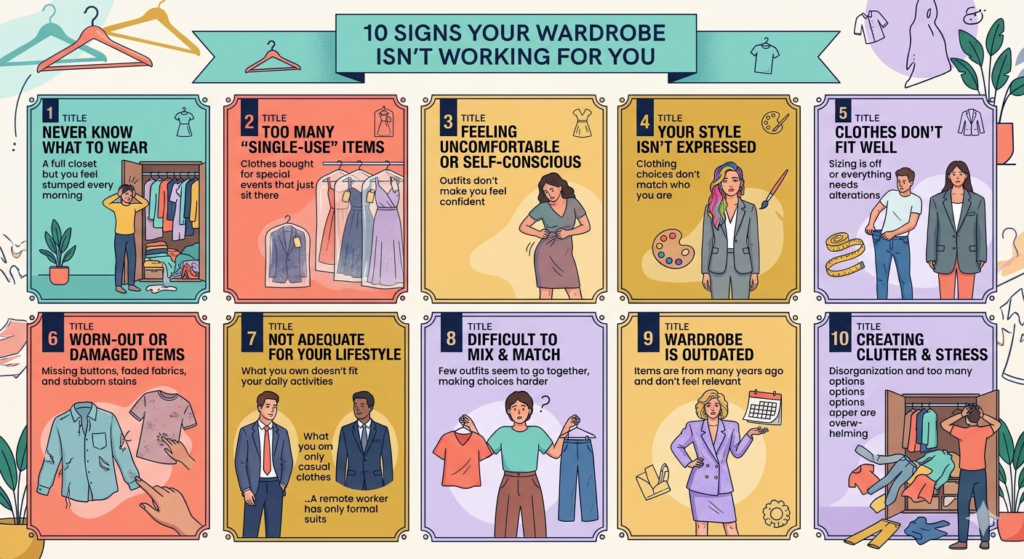
10 Signs Your Wardrobe Isn’t Working for You
1. You Always Feel Like You Have Nothing to Wear
One of the clearest signs that your wardrobe isn’t working for you is the constant feeling that you have nothing suitable to wear.
This situation happens when many items in your wardrobe:
- Do not match each other
- Do not suit your lifestyle
- Do not fit comfortably
- No longer reflect your personal style
A functional wardrobe should make it easy to combine clothing items into outfits.
2. Your Closet Is Overcrowded
An overcrowded closet may seem like a sign of variety, but it often creates confusion.
When your closet contains too many clothes:
- You cannot clearly see what you own
- Some items remain forgotten
- Choosing outfits becomes stressful
Decluttering your wardrobe can create space and help you focus on clothes that truly matter.
3. Many Clothes Still Have Tags
Finding clothes with tags still attached is another sign that your wardrobe may not be working effectively.
These items are often purchased because:
- They were on sale
- They looked attractive in the store
- They were part of a fashion trend
However, if they remain unused, it means they do not truly fit your lifestyle or personal style.
4. Your Clothes No Longer Fit Properly
Bodies change over time, and clothing that once fit perfectly may become uncomfortable.
Keeping clothes that do not fit can make your wardrobe frustrating to manage.
Instead of holding on to items that no longer suit you, focus on clothes that make you feel comfortable and confident.
5. Your Wardrobe Doesn’t Match Your Lifestyle
Your wardrobe should reflect how you live today.
For example:
- Someone working from home may not need many formal outfits
- A person with an active lifestyle may need comfortable clothing
- Social activities may influence clothing choices
If your wardrobe reflects an outdated lifestyle, it may not function properly.
6. Getting Dressed Takes Too Long
When a wardrobe contains too many mismatched items, choosing outfits can take a long time.
Decision fatigue occurs when there are too many choices that do not combine easily.
A well-organized wardrobe should allow you to create outfits quickly.
7. You Keep Buying Clothes but Feel Unsatisfied
Many people believe buying new clothes will solve wardrobe problems.
However, shopping without a clear plan often leads to more clutter.
Instead of constantly purchasing new clothes, it is better to evaluate what your wardrobe actually needs.
8. You Follow Trends but Rarely Wear Them
Fashion trends change quickly. While trends can be exciting, they do not always suit every person.
If your wardrobe contains many trendy pieces that you rarely wear, it may indicate that you are prioritizing trends over personal style.
Timeless clothing often provides better long-term value.
9. Your Clothes Don’t Reflect Your Personal Style
Clothing should represent your personality and preferences.
Over time, personal style evolves, but wardrobes sometimes remain unchanged.
Updating your wardrobe to reflect your current style can improve confidence and comfort.
10. Your Wardrobe Feels Stressful Instead of Inspiring
Opening your closet should make you feel confident and ready for the day.
If your wardrobe creates stress or frustration, it is a strong indication that it needs improvement.
Simplifying your wardrobe can transform it into a more supportive part of your daily routine.
What to Do If Your Wardrobe Isn’t Working for You
If you realize that your wardrobe isn’t working for you, the next step is making improvements.
A few simple changes can help you build a wardrobe that supports your lifestyle.
Declutter Your Closet
Start by removing items that no longer serve a purpose.
Consider donating or selling clothes that:
- Do not fit
- Have not been worn for a long time
- No longer match your style
Decluttering creates space and clarity.
Identify Your Personal Style
Understanding your personal style helps guide better clothing choices.
Think about:
- colors you enjoy wearing
- clothing styles that suit your lifestyle
- outfits that make you feel confident
When you know your style, shopping becomes easier and more intentional.
Build a Versatile Wardrobe
A versatile wardrobe contains clothing items that can easily mix and match.
Examples include:
- neutral shirts
- classic jeans
- simple jackets
- comfortable shoes
These pieces allow you to create multiple outfits from fewer items.
Simple Ways to Fix a Wardrobe That Isn’t Working for You
Improving your wardrobe does not require buying many new clothes. Small changes can make a big difference.
Focus on Quality
High-quality clothing lasts longer and often looks better.
Choose Neutral Colors
Neutral colors are easier to combine with other pieces.
Organize Your Closet
Keeping your wardrobe organized helps you see everything clearly.
Shop With Purpose
Before buying new clothes, consider whether the item truly fits your wardrobe.
Benefits of a Functional Wardrobe
A well-organized wardrobe offers several benefits.
It can:
- reduce daily stress
- save time when getting dressed
- improve personal confidence
- reduce unnecessary spending
When clothing choices align with your lifestyle, everyday routines become simpler.
Why a Wardrobe That Works Matters
A wardrobe is more than a collection of clothes. It plays an important role in daily routines, confidence, and personal expression. When your clothing collection is organized and aligned with your lifestyle, getting dressed becomes quick and enjoyable.
However, when a wardrobe becomes cluttered with items that no longer serve a purpose, it can create unnecessary stress. Many people spend valuable time searching for outfits or feeling dissatisfied with their clothing choices. This situation often occurs when a wardrobe isn’t working for you.
A functional wardrobe simplifies life. It ensures that every item in your closet has a purpose and contributes to your overall style. When your wardrobe works effectively, it helps you feel confident, prepared, and comfortable in any situation.
Understanding the importance of a functional wardrobe can motivate you to reorganize your clothing and make better fashion decisions in the future.
Common Reasons a Wardrobe Stops Working
There are several reasons why wardrobes stop functioning effectively. Over time, habits, trends, and lifestyle changes can lead to a closet filled with clothes that no longer meet your needs.
One common reason is impulse shopping. Many people buy clothes simply because they look attractive in stores or are offered at discounted prices. While these purchases may seem exciting at the moment, they often remain unused because they do not fit with existing clothing items.
Another reason is changing personal style. As people grow and experience different stages of life, their fashion preferences evolve. Clothes that once felt stylish may no longer reflect who they are today.
Lifestyle changes can also impact wardrobes. For example, someone who previously worked in a corporate office may have owned many formal outfits. If that person later shifts to remote work or a more casual environment, those clothes may no longer be useful.
These factors can gradually lead to a situation where the wardrobe becomes disorganized and ineffective.
The Psychological Impact of an Unorganized Wardrobe
Many people underestimate the psychological effect that clothing can have on daily life. A cluttered wardrobe can influence mood, confidence, and productivity.
When individuals struggle to find suitable outfits, they may start their day feeling frustrated. This frustration can affect their overall mindset and energy levels.
On the other hand, a well-organized wardrobe creates a sense of control and clarity. Knowing that every item in your closet fits well and matches your style can boost confidence and make daily routines smoother.
Fashion psychologists often explain that clothing choices influence how people perceive themselves and how others perceive them. Wearing outfits that reflect personal style can improve self-image and confidence.
Therefore, improving your wardrobe is not just about fashion—it is also about creating a positive daily experience.
How to Identify Clothes You No Longer Need
One of the most important steps in improving a wardrobe is identifying items that no longer serve a purpose.
Many people hold onto clothes for emotional reasons. They may keep items because they were expensive, gifted by someone special, or associated with past memories. However, if these clothes are never worn, they simply occupy valuable space.
A practical method for identifying unnecessary clothes is to ask a few simple questions:
- Have I worn this item in the last year?
- Does it fit comfortably today?
- Does it match other pieces in my wardrobe?
- Do I feel confident wearing it?
If the answer to most of these questions is no, it may be time to remove the item from your closet.
Decluttering helps create a wardrobe that contains only useful and meaningful clothing.
The Concept of a Capsule Wardrobe
Many fashion experts recommend creating a capsule wardrobe to solve wardrobe problems. A capsule wardrobe is a carefully selected collection of clothing items that can be mixed and matched easily.
Instead of owning dozens of random pieces, a capsule wardrobe focuses on versatile and timeless items.
Typical capsule wardrobe pieces include:
- neutral tops
- classic jeans or trousers
- versatile jackets
- simple dresses
- comfortable shoes
These pieces work together to create multiple outfit combinations.
The advantage of this approach is that it reduces clutter while increasing flexibility. Even with fewer clothes, you can create many stylish outfits.
Smart Shopping Habits for a Better Wardrobe
Improving your wardrobe also requires developing better shopping habits.
Many wardrobe problems occur because people buy clothes without considering how they fit into their existing collection. Adopting intentional shopping habits can prevent this issue.
Before buying new clothing, consider the following questions:
- Does this item match at least three outfits I already own?
- Is it comfortable and suitable for my lifestyle?
- Will I still like this piece next year?
Thinking carefully before making purchases helps avoid unnecessary clutter.
Another helpful strategy is creating a shopping list based on wardrobe gaps. Instead of browsing randomly, focus on items that truly complete your wardrobe.
Organizing Your Closet Effectively
Organization plays a crucial role in maintaining a functional wardrobe.
When clothes are arranged neatly, it becomes easier to see everything you own. This visibility helps prevent duplicate purchases and encourages creative outfit combinations.
Some effective closet organization methods include:
Arrange Clothes by Category
Group similar items together, such as shirts, pants, dresses, and jackets. This makes it easier to locate specific pieces.
Use Proper Storage
Hangers, shelves, and storage boxes can help maintain order in your closet.
Rotate Seasonal Clothing
Store out-of-season clothes separately to create more space for current outfits.
These simple steps can significantly improve wardrobe efficiency.
Building Confidence Through Clothing
Clothing plays a powerful role in shaping self-confidence. When people wear outfits that fit well and reflect their personality, they often feel more comfortable in social and professional situations.
A wardrobe that works well allows individuals to express their identity through fashion. It also helps them adapt to different environments, whether attending meetings, social gatherings, or casual outings.
By choosing clothes that align with personal style and lifestyle needs, individuals can build a wardrobe that enhances their confidence.
Maintaining a Functional Wardrobe Long-Term
Once you have created a wardrobe that works for you, maintaining it is equally important.
Over time, wardrobes can gradually return to clutter if new clothes are added without careful consideration.
To maintain a functional wardrobe, consider these habits:
- Review your closet every few months
- Donate items that you no longer wear
- Avoid impulsive purchases
- Focus on quality rather than quantity
These practices help ensure that your wardrobe remains organized and practical.
Sustainable Fashion and Wardrobe Management
Modern consumers are becoming more aware of sustainability in fashion. Fast fashion has contributed to excessive clothing production and environmental waste.
Creating a functional wardrobe also supports sustainable fashion practices. When you focus on versatile, long-lasting pieces, you reduce the need for constant shopping.
Sustainable wardrobe habits include:
- choosing high-quality clothing
- repairing damaged items instead of discarding them
- donating unused clothes
- buying from ethical fashion brands
These practices benefit both the environment and your personal wardrobe.
The Long-Term Benefits of a Well-Planned Wardrobe
Investing time in improving your wardrobe provides long-term benefits.
A well-planned wardrobe:
- simplifies daily routines
- saves money by reducing unnecessary purchases
- improves personal confidence
- creates a consistent personal style
Many people find that once they organize their wardrobe properly, they feel more satisfied with their clothing choices.
Creating a Wardrobe That Truly Works for You
After identifying the signs that your wardrobe isn’t working for you, the next step is building a clothing collection that supports your lifestyle. Many people assume this requires buying many new clothes, but the truth is that improvement usually comes from better organization and smarter choices.
A wardrobe that works well should contain pieces that fit comfortably, match easily with other items, and suit the activities you perform daily. When clothing serves a clear purpose, getting dressed becomes much easier and more enjoyable.
One helpful approach is focusing on versatility. Instead of owning many specialized outfits, choose clothing pieces that can be styled in multiple ways. For example, a simple neutral shirt can work with jeans for casual settings or with formal trousers for professional environments.
Versatility reduces clutter and increases the number of outfit combinations available in your wardrobe.
Understanding the Role of Personal Style
Personal style is an important factor in building a wardrobe that works effectively. Many wardrobe problems occur when people purchase clothes based on trends rather than their true preferences.
While fashion trends can provide inspiration, they should not dictate every clothing decision. Personal style reflects individual personality, comfort preferences, and lifestyle needs.
Developing personal style takes time. It often involves experimenting with different colors, patterns, and clothing shapes to determine what feels most authentic.
When your wardrobe aligns with your personal style, clothing choices become more natural and satisfying.
Choosing the Right Colors for Your Wardrobe
Color selection also plays a key role in creating a functional wardrobe. Many people struggle with outfit combinations because their clothes include too many unrelated colors.
Choosing a consistent color palette can simplify styling decisions. Neutral colors such as black, white, grey, navy, and beige are especially useful because they match easily with other shades.
Adding a few accent colors can create visual interest without making outfit combinations complicated.
When your clothing colors complement each other, it becomes easier to create multiple outfits from a smaller number of pieces.
Quality Over Quantity
Another important principle in wardrobe management is focusing on quality rather than quantity.
Fast fashion encourages people to buy many inexpensive items that may not last long. While these clothes may seem affordable initially, they often wear out quickly and need frequent replacement.
Investing in durable, well-made clothing can provide better long-term value. Quality fabrics and strong stitching ensure that garments maintain their shape and appearance after repeated use.
When your wardrobe contains high-quality items, you are more likely to enjoy wearing them and less likely to replace them frequently.
Seasonal Wardrobe Planning
Planning your wardrobe according to seasons can also improve organization and functionality.
Different weather conditions require different clothing types. For example, winter wardrobes may include coats, sweaters, and boots, while summer wardrobes focus on lightweight fabrics and breathable materials.
Storing off-season clothing separately can create more space in your main closet and make it easier to see the items you currently need.
Seasonal planning also helps you evaluate whether certain items are still useful or should be replaced.
Avoiding Future Wardrobe Problems
Once you have created a wardrobe that works for you, maintaining it requires consistent habits.
One effective strategy is practicing mindful shopping. Instead of purchasing clothes spontaneously, take time to evaluate whether an item truly fits your wardrobe.
You can also create a simple rule, such as removing one item from your wardrobe whenever you buy a new one. This approach helps maintain balance and prevents overcrowding.
Regular wardrobe reviews are another helpful practice. Every few months, examine your clothing and identify items that are no longer worn or needed.
These small habits ensure that your wardrobe remains organized and functional over time.
Conclusion
Recognizing the signs that your wardrobe isn’t working for you is the first step toward creating a more practical clothing collection.
By decluttering unused items, understanding your personal style, and focusing on versatile clothing pieces, you can build a wardrobe that supports your lifestyle and makes getting dressed easier.
A functional wardrobe should help you feel confident and prepared for the day. With thoughtful organization and intentional shopping habits, your wardrobe can become one of the most useful parts of your daily routine.